
Quick Summary
To open wine without breaking cork, use a two-prong cork retriever if you have one, since it grips the cork with the least force near the glass. Without a retriever, screw a sturdy screw into a firm cork and pull straight up with pliers. Never use a knife blade, bike pump, or heat on the neck.
- Dry, crumbly, or shrunken corks are the most fragile, so choose a gentler method for them.
- Pull straight up, never at an angle, because angled pulls can snap the cork in half.
- Stop pulling right away if the cork breaks, since more force drives the lower piece deeper.
- Strain the wine through a fine mesh or cheesecloth to catch cork crumbs before pouring.
- Skip the screw on synthetic corks, which are slick; grip an exposed part with pliers instead.
Table of Contents
- Why Corks Break and What Protects Them
- Opening Wine Without a Corkscrew: Methods Ranked by Safety
- How to Remove a Broken Wine Cork Step by Step
- Wine Opener Troubleshooting: When the Cork Won't Come Out
- Choosing an Electric Opener for Gentler Cork Removal
- Frequently Asked Questions
Why Corks Break and What Protects Them
Most cork damage happens before you start. Dry corks, old bottles, and angled corks crumble easily.
Natural cork dries out over time. Bottles stored upright often have dry corks; bottles stored on their side keep the cork moist and flexible.
Watch out: If the cork looks crumbly or shrunken when you first see the bottle, plan for a slower, gentler opening method.
Opening Wine Without a Corkscrew: Methods Ranked by Safety
This ranking weighs four things: cork intactness, force near glass, mess, and whether cork can be pushed into the wine. Use it to pick a method before you start.
| Method | Cork Intact? | Force Near Glass | Mess Risk | Best Situation |
|---|---|---|---|---|
| Two-prong cork retriever | High | Low | Low | Any intact cork, especially fragile ones |
| Screw and pliers | Medium | Medium | Low | Firm natural cork with an exposed top |
| Pushing the cork in | None | Low | High | Cork already loose or partly broken |
| Knife blade | Low | High | Medium | Not recommended |
| Bike pump or air pressure | Low | High | High | Not recommended |
| Shoe or padded wall tap | Medium | Medium | Medium | Firm cork, no tools at all |
Methods to Avoid and Why
- Knife blades. Sliding a blade between cork and glass concentrates force on the neck, causing lacerations and chipped rims that can shed glass into the wine.
- Bike pumps and compressed air. Pressurizing a sealed bottle can shatter it, sending fragments outward and releasing the cork unpredictably.
- Heating the neck with flame or hot water. Thermal shock can crack the glass and damage the wine. Warming with your hands is the only version worth trying.
Choosing the Right Method in Ten Seconds
- Cork looks dry, crumbly, or shrunken: Use a two-prong retriever if you have one; otherwise push the cork in cleanly and strain. Do not use a screw.
- Cork is firm and the top is exposed: Screw and pliers is the most reliable no-corkscrew option.
- Cork is synthetic or slick: Skip the screw. Grip an exposed portion with pliers or push it in.
Using a Fork or Screw and Pliers
A fork or a long screw can grip a cork when you have no proper tool. Both work best on firm corks.
For the fork method, slide the tines between cork and bottle wall, then turn slowly while pulling up.
Watch out: Pulling at an angle can snap the cork in half, leaving the bottom piece stuck in the neck.
Pushing the Cork In and Pouring Carefully
Pushing the cork in is a last resort.
Press the cork down gently with a clean, dry object like a wooden spoon handle. Tilt the bottle as you pour and use a fine strainer to catch cork pieces.
Watch out: Do not push a cork in if the bottle is warm or has been shaken. Pressure can spray wine and cork fragments when the cork releases.
How to Remove a Broken Wine Cork Step by Step
A broken cork is rarely one piece. It usually splits into a top fragment, a plug jammed in the neck, and crumbs in the wine. Treat each piece separately instead of yanking at the whole mess, and follow these steps to open wine without breaking cork any further.
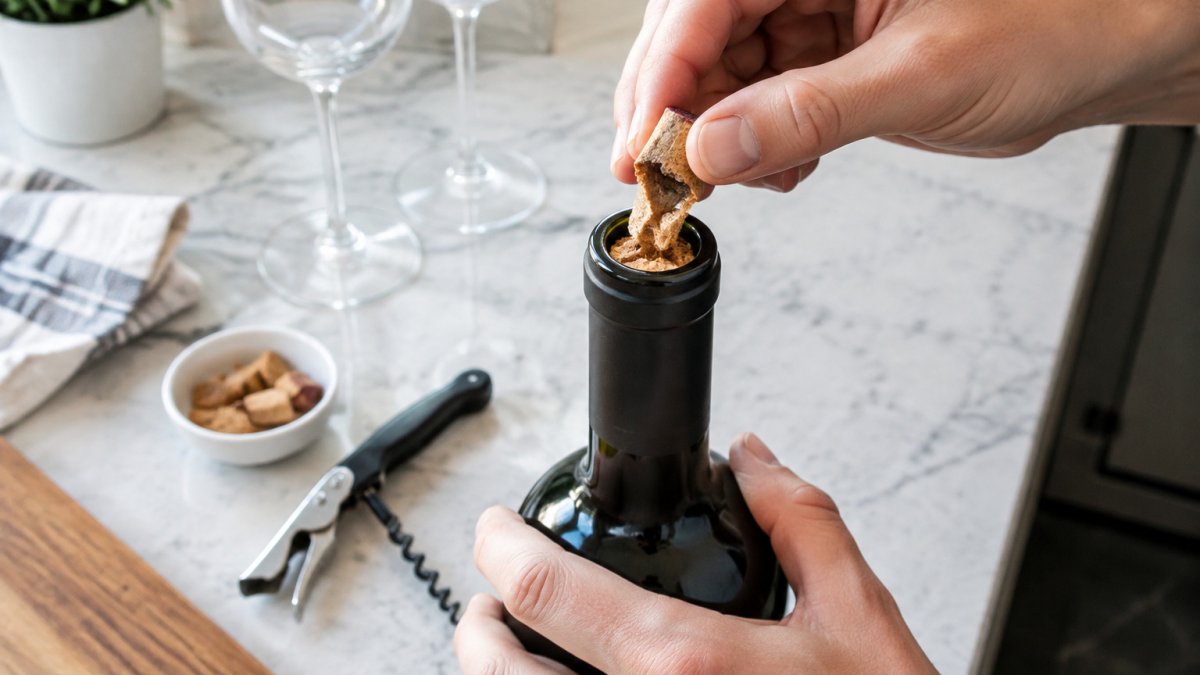
- Stop pulling immediately. Every extra pull drives the lower half deeper and grinds crumbs into the wine. Set the bottle on a stable, non-slip surface.
- Assess what is left in the neck. Shine a light down the opening. If a solid plug protrudes above the lip, you have a grip point. If it sits flush or below, gripping tools will only push it in.
- Grip exposed cork with parallel jaws, not a twisting motion. Long-nose or locking pliers work better than a fork because the jaws clamp on two sides and pull straight up. Clamp gently, pull vertically, and stop the moment the cork starts to shear.
- Use a screw only if the plug is firm. Drive a sturdy wood screw into the center, angle it slightly toward the thicker side, and lever it up with a hammer claw or pliers. A short screw strips out of soft cork; a thick one splits the plug further.
- Push the remainder in only as a last resort. If the plug is below the lip and too small to grip, use a clean, blunt tool like a wooden spoon handle to push it in with one smooth motion. Do not stab at it or use a knife blade.
- Strain before you pour. Line a fine-mesh strainer with a coffee filter or cheesecloth and pour into a decanter or second vessel. This catches cork crumbs and stirred-up sediment. Rinse the strainer if the flow slows.
Watch out: Never use a corkscrew, knife, or screw on a cork that has crumbled below the lip. The tool will push fragments deeper and can crack the neck glass, a cut hazard.
When the Cork Is Stuck, Slipping, or Half Out
- Cork spins but will not rise: The screw has lost purchase. Back it out, wipe the cork dry, and reinsert at a different point. Wet cork offers almost no grip.
- Cork rises partway then stalls: Do not rock the tool side to side; rocking snaps the plug. Apply steady upward pressure for several seconds; if it does not move, switch to pliers on the exposed portion.
- Cork breaks flush with the lip: You have no grip point. Push it in cleanly and strain, or use a two-prong retriever if on hand. Insert prongs along the bottle wall, not through the cork, and pull straight up.
- Crumbs are already in the wine: Do not fish them out with a utensil. Strain the whole bottle into a decanter. Cork is inert and will not affect flavor once removed, but it will clog a pour spout and end up in glasses.
Cork Type Changes the Recovery Plan
Natural cork tends to shear cleanly and can often be gripped and pulled. Synthetic corks are slick and resist screws, so pliers on an exposed portion are more reliable. Old, brittle natural corks crumble and most often require the push-and-strain route. If the cork looks dry and shrunken, skip the screw and go straight to the gentlest method you have.
Wine Opener Troubleshooting: When the Cork Won't Come Out
If the cork still won't budge, try these fixes:
- Warm the neck gently with your hands for a minute to loosen the cork slightly.
- Re-check your grip. A screw that is too short may slip out.
- Try a different angle. Keep the bottle steady and pull straight up.
- Give up on the cork if it keeps breaking. Push it in and strain the wine instead.
Many people try too hard on the first attempt. Stop when you feel strong resistance and reassess.
Choosing an Electric Opener for Gentler Cork Removal
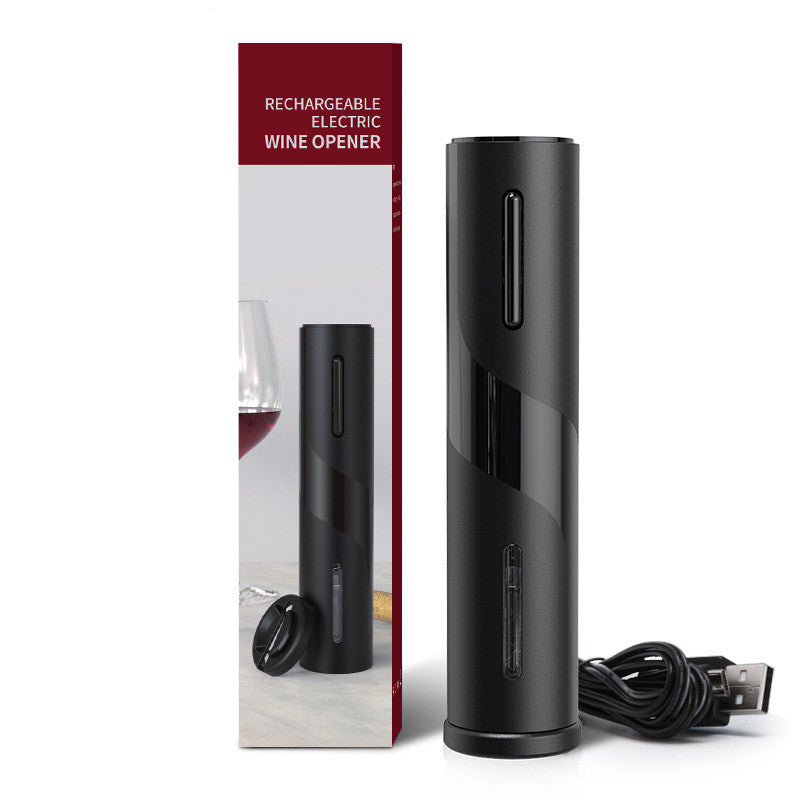
An electric opener can lift the cork with steady, even force, which many hosts find gentler on older corks.
The Electric Wine Bottle Opener from AM*FAM ELECTRONICS is priced at $49.50. It comes in rechargeable and battery-powered models, measures 48 × 215 mm, and is made from ABS and an alloy spiral hook. Shop the Electric Wine Bottle Opener to see which option fits your needs.
A wine chiller can also make opening easier, since a cooler bottle is simpler to handle. Read 5 Reasons to Use a Wine Chiller at Home to learn more.
Best for: Hosts who open wine often and want to protect older corks.
Skip if: You open only a few bottles a year and already own a good manual corkscrew.
Protecting the cork is easier with the right tool.
Frequently Asked Questions
Is there another way to open wine without a corkscrew?
Yes. Common alternatives include using a fork or a screw with pliers to grip the cork, or pushing the cork into the bottle with a thin wooden spoon handle. Each method carries a risk of cork fragments falling into the wine or the cork crumbling further, so the gentlest option is usually to work slowly and keep the bottle steady. A dedicated corkscrew or an electric opener remains the most reliable choice when one is available.
What should you do if a wine cork breaks while opening?
Stop pulling immediately so the remaining cork does not split further. Use a fork or a thin, clean screw to gently grip the lower part of the cork and lift it out in small pieces. If fragments fall in, pour the wine through a fine strainer or cheesecloth into a decanter before serving. Avoid forcing the rest of the cork down with a knife, since this often pushes debris deeper into the bottle.
Is it safe to push a broken cork into a wine bottle?
It is generally not recommended. Pushing a cork in can release small pieces into the wine, which are unpleasant to taste and difficult to remove. It can also leave the cork wedged lower in the neck, making later removal harder. If you must push the cork in, do so with a clean, straight tool and strain the wine before serving.
